



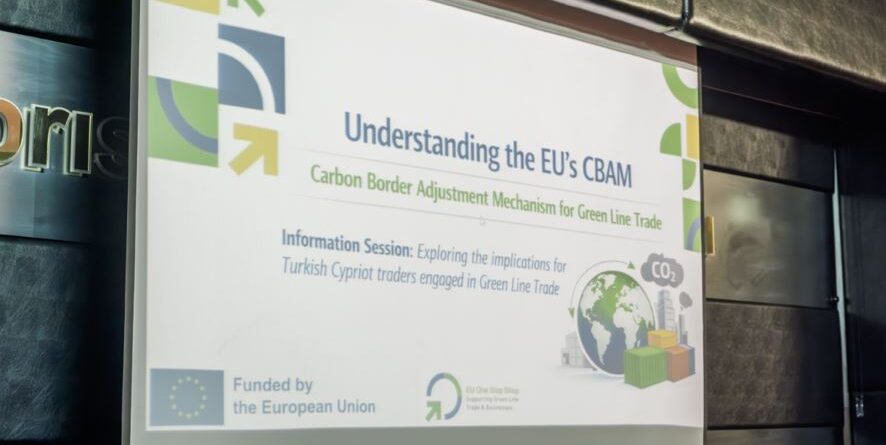
1. What is the Carbon Border Adjustment Mechanism (CBAM)?
The Carbon Border Adjustment Mechanism (CBAM) is the EU’s new system for ensuring that certain goods face a carbon cost comparable to the one paid by EU producers under the EU Emissions Trading System (EU ETS). It supports the EU’s climate goals by encouraging cleaner industrial production globally.
CBAM currently applies to carbon‑intensive sectors such as iron and steel, aluminium, cement, fertilizers, electricity, and hydrogen. These sectors are major contributors to global industrial emissions.
The mechanism aims to prevent carbon leakage—when production shifts to countries with weaker environmental rules or when EU products are replaced by more carbon‑intensive imports. By applying a fair carbon price at the border, CBAM creates a level playing field and rewards cleaner production methods.
2. How does CBAM work in practice?
- 2023–2025 (Transitional phase): EU operators placing products on the EU Single Market must submit quarterly CBAM reports detailing the embedded emissions of imported goods.
- From 2026 (Definitive phase): Operators placing products on the EU Single Market must purchase CBAM certificates to cover the emissions associated with their imports.
- Carbon price adjustments: If a carbon price has already been paid in the country of production, this amount can be deducted to avoid double charging.
3. What does CBAM mean for Turkish Cypriot traders?
Although CBAM obligations fall on operators placing products on the EU Single Market, TC traders and producers play a crucial role. Buyers rely on them to provide:
- Accurate production process information
- Activity data (fuel, electricity, raw materials)
- Direct and indirect emissions data
- Evidence of any carbon price already paid
Without this information, EU operators placing products on the EU Single Market cannot submit compliant CBAM reports, which may affect their ability to continue importing from specific suppliers.
4. Which products are covered?
During the initial phase, CBAM applies to:
- Iron & steel
- Aluminium
- Cement
- Fertilisers
- Electricity
- Hydrogen
The EU may expand the list in the future.
5. What are the key CBAM dates?
|
Phase |
What traders need to do |
Timeline |
|
Transitional phase |
Quarterly reporting of embedded emissions |
Oct 2023 – Dec 2025 |
|
Definitive phase |
EU operators placing products on the EU Single Market must buy & surrender CBAM certificates |
From Jan 2026 |
|
Weekly certificate price |
CBAM price updated weekly |
From 2027 |
6. Does CBAM apply to Green Line Trade?
Yes. CBAM applies to all goods entering the EU, including those crossing the Green Line. If a product is CBAM‑covered, the EU operator placing products on the EU Single Market must comply with CBAM requirements. TC traders must therefore be ready to provide accurate emissions data and documentation.
CBAM does not replace Green Line procedures — it adds an additional layer of EU climate compliance.
7. Who is responsible for CBAM reporting?
- EU operators placing products on the EU Single Market are legally responsible for submitting CBAM reports and purchasing certificates.
- TC traders and producers must provide the embedded‑emissions data needed for compliance.
CBAM is a shared chain of responsibility.
8. What information must traders provide?
Producers must supply:
- Production route (e.g., blast furnace, electric arc furnace)
- Activity data (fuel use, electricity consumption, raw materials)
- Direct emissions
- Indirect emissions (electricity‑related)
- Any carbon price already paid
The European Commission provides templates and calculation tools.
9. What if producers cannot calculate emissions?
During the transitional phase, traders may use:
- EU default values
- Simplified reporting methods
- Estimated data (if justified)
From 2026 onward, verified emissions data will be required.
10. What documents should traders prepare?
Traders should prepare:
- A CBAM data sheet for each product
- Evidence of production processes
- Energy and fuel consumption records
- Environmental certificates or audits (if available)
- A producer declaration confirming data accuracy
This mirrors the logic of technical files already required for Green Line Trade.
11. How does CBAM interact with TCCC procedures?
TCCC will continue to check:
- Product classification
- Compliance with the Green Line Regulation
- Accompanying documentation
CBAM does not replace KTTO requirements — it adds an additional climate‑related reporting layer.
12. Will traders have to pay for CBAM certificates?
No. EU operators placing products on the EU Single Market purchase and surrender CBAM certificates. However, the data provided by traders determines how many certificates the operators placing products on the EU Single Marketmust buy.
13. What are the most common mistakes to avoid?
- Missing or incomplete emissions data
- Using outdated default values
- Mixing up direct and indirect emissions
- Providing inconsistent production information
- Assuming CBAM does not apply to Green Line Trade
14. Who can traders contact for support?
The EU OSS will offer guidance and follow‑up support for traders preparing CBAM‑related documentation.